
The Significance of the 4th of July
The 4th of July, or Independence Day, is a national holiday in the United States. It celebrates the adoption of the Declaration of Independence on July 4, 1776, a document written by Thomas Jefferson. This historical document declared the thirteen American colonies free from British rule.
Beyond the popular celebrations of fireworks, parades, and barbecues, it’s a day to reflect on the freedoms and values the United States stands for. This article will address the 4th of July lesson plans and activities to help students understand and appreciate the Significance of the holiday:
Lesson Plans and Activities for the 4th of July :

Interactive History Lessons
- Declaration of Independence Deep Dive:
- Provide students with copies of the simplified version of the Declaration of Independence.
- Discuss its core principles, such as “life, liberty, and the pursuit of happiness,” and the historical context that led to its creation.
- Have students highlight and interpret significant excerpts, discussing what these phrases meant at the time and what they mean today.
- Activity: “If I were a colonist…” Ask students to write a short journal entry or letter from a colonist’s perspective, expressing their thoughts and feelings about the call for independence.
- Revolutionary War Timeline:
- Collaboratively create a timeline of key events leading to July 4, 1776, and beyond.
- Include major milestones like the Boston Tea Party, the Intolerable Acts, the Continental Congresses, the Battles of Lexington and Concord, and the drafting and signing of the Declaration.
- Activity: Divide students into groups, assigning each group a specific event. They can research and create a small presentation or visual representation for their event to add to the class timeline.

Patriotic Arts and Crafts
- American Flag Symbolism:
- Explore the design and symbolism of the American flag (stars, stripes, and colours). Discuss the evolution of the flag.
- Activity: Students can design their flags using various art materials (construction paper, fabric scraps, paint). Please encourage them to think about what each element represents to them.
- Fireworks in Art:
- Discuss the visual appeal of fireworks.
- Activity: Teach students different art techniques (e.g., pointillism, splatter painting, blow painting with straws) to create their own “fireworks” drawings or paintings on dark paper.
- Activity: Craft paper tube fireworks or sparklers using construction paper, tissue paper, and glitter.
Creative Writing Assignments
- Letters from the Past:
- Ask students to choose a historical figure from the American Revolution (e.g., George Washington, Betsy Ross, or an ordinary citizen) and write a letter expressing their hopes, fears, and daily life during that period.
- Encourage research into the chosen figure or type of person.
- Patriotic Poetry:
- Inspire students to write poems (haikus, acrostic, free verse) about themes like freedom, independence, bravery, or what the 4th of July means to them personally.

STEM Activities
- Simple Rocket Science (Baking Soda & Vinegar):
- Conduct a safe and simple rocket experiment using baking soda and vinegar (e.g., in a film canister or plastic bottle).
- Explain the basic principles of propulsion and how gases create force, drawing parallels to how fireworks work (without replicating actual fireworks).
- “Parade Float” Engineering Challenge:
- Task students with designing and building a 4th of July parade float model using recycled materials (cardboard boxes, bottles, paper, etc.).
- Encourage creativity and teamwork, focusing on structural stability and aesthetic design.
Cultural Studies & Music
- Independence Day Traditions:
- Research and present how different regions or communities in the United States celebrate the 4th of July. Discuss variations in traditions, food, and festivities.
- Activity: Have students interview family members about their 4th of July traditions.
- Patriotic Music Exploration:
- Explore the history and Significance of patriotic songs like “The Star-Spangled Banner,” “America the Beautiful,” and “Yankee Doodle.”
- Analyze the lyrics and discuss their historical context and emotional impact.
- Activity: Learn and perform one or more of these songs as a class.
Virtual Field Trips & Resources
- Visit Historical Sites (Virtually):
- Utilize online resources to take students on virtual tours of significant historical sites related to American independence, such as:
- Independence Hall (where the Declaration was debated and adopted)
- The Liberty Bell
- The National Archives (where the Declaration is housed)
- Colonial Williamsburg
- Utilize online resources to take students on virtual tours of significant historical sites related to American independence, such as:
- Museum Exhibits Online:
- Explore online exhibits related to the American Revolution and the 4th of July from institutions like the Smithsonian, the National Museum of American History, or the American Revolution Museum. Many offer digital collections, interactive experiences, and educational resources.
These activities aim to provide a comprehensive and engaging learning experience, connecting the 4th of July’s historical roots with its modern-day celebrations and Significance.
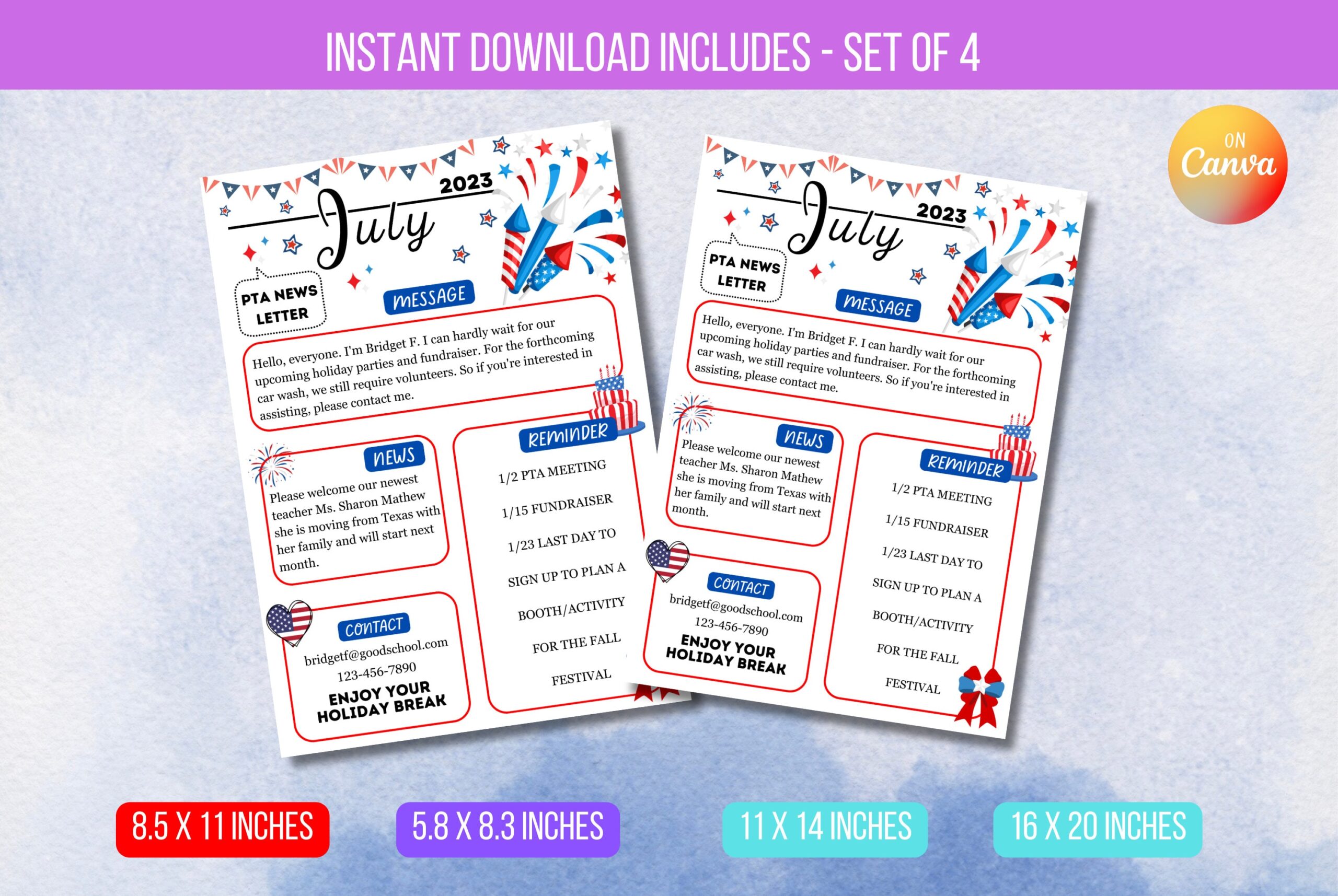
Editable July Newsletter Template